 Image 1 of 1
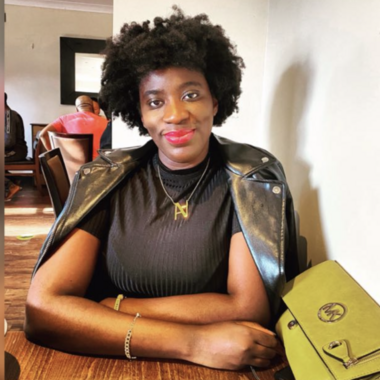
Deep Chat - ADHD in the Black community with Abigail Agyei-Jones MBE
26th November 2026
ADHD is misunderstood. Misdiagnosed. So many people forgotten.
But one community is more impacted and more forgotten than most. So much so that it's rarely even spoken about inside the ADHD community. The Black community.
And the research backs it up. A 2020 meta-analysis in JAMA Psychiatry found around 14% of Black children and young people have ADHD, higher than the general estimate, which blows apart the old assumption that Black people get ADHD less. Teachers report more ADHD symptoms in Black kids than in any other group, while Black parents are less likely to report them, because of what a label costs a Black child. And in the UK, Black people screen positive for ADHD at a higher rate than White British people, yet are diagnosed later, if at all. Which means it's very likely a Black client will sit in front of you undiagnosed, misdiagnosed, or diagnosed with something else entirely.
It shows up as the "naughty" kid who was actually struggling. The girl who was told she was loud, bossy, too much, and learned to be strong instead. The woman who's been holding everything together for so long that nobody, including her, thought to ask why it's so hard. Abigail calls it the Superwoman Schema. Be strong. Don't show it. Cope.
I'll say it plainly. I don't have lived experience of this. Most ADHD coaches don't. Which is exactly why our coaches don't get a watered down version of it from me. They get the person who lives it.
So, coach to coach: do you know what adultification did to the client in front of you when she was nine? Can you spot the Superwoman Schema in a session, and do you know how to work with it rather than against it? Is your coaching room actually safe for a Black client, or do you just assume it is? And when is your own lens the thing that's getting in the way?
The process to support ourselves and our clients through this is complex, which is why this Deep Chat happens on every single coach training we do. And now you can join this one without being on the training.
What you'll walk away with:
Why ADHD is underdiagnosed and misdiagnosed in the Black community, and what that does to a person by the time they reach you
How ADHD shows up differently, and gets read differently, in Black children, Black women and Black men
Adultification, the Superwoman Schema and cultural insensitivity, in plain English, and what they look like in a coaching session
The questions to ask, and the ones to stop asking
How to make your coaching room safe, and what to do when your own lens is the problem
Where to signpost: the communities and practitioners who get it
And there ain't no one better for the job than Abigail Agyei MBE. Senior policy and strategy advisor in the UK Civil Service, awarded an MBE for public and community services, TEDx speaker on Black women and ADHD, one of the Top 50 Influential Neurodivergent Women, and a late diagnosed ADHDer herself. A woman who KNOWS, like really knows, because she went looking for herself in the ADHD conversation and found the Black community wasn't in it, so she put it there. And on top of all that, she's [YOUR TWO WORDS FOR HER]. Her line, not mine: "If you don't feel that you have a seat at the table, bring your own chair."
🧡 Untangling ADHD in the Black Community as an ADHD Coach, with Abigail Agyei-Jones MBE, Senior policy advisor, UK Civil Service, TEDx speaker
26th November 2026
ADHD is misunderstood. Misdiagnosed. So many people forgotten.
But one community is more impacted and more forgotten than most. So much so that it's rarely even spoken about inside the ADHD community. The Black community.
And the research backs it up. A 2020 meta-analysis in JAMA Psychiatry found around 14% of Black children and young people have ADHD, higher than the general estimate, which blows apart the old assumption that Black people get ADHD less. Teachers report more ADHD symptoms in Black kids than in any other group, while Black parents are less likely to report them, because of what a label costs a Black child. And in the UK, Black people screen positive for ADHD at a higher rate than White British people, yet are diagnosed later, if at all. Which means it's very likely a Black client will sit in front of you undiagnosed, misdiagnosed, or diagnosed with something else entirely.
It shows up as the "naughty" kid who was actually struggling. The girl who was told she was loud, bossy, too much, and learned to be strong instead. The woman who's been holding everything together for so long that nobody, including her, thought to ask why it's so hard. Abigail calls it the Superwoman Schema. Be strong. Don't show it. Cope.
I'll say it plainly. I don't have lived experience of this. Most ADHD coaches don't. Which is exactly why our coaches don't get a watered down version of it from me. They get the person who lives it.
So, coach to coach: do you know what adultification did to the client in front of you when she was nine? Can you spot the Superwoman Schema in a session, and do you know how to work with it rather than against it? Is your coaching room actually safe for a Black client, or do you just assume it is? And when is your own lens the thing that's getting in the way?
The process to support ourselves and our clients through this is complex, which is why this Deep Chat happens on every single coach training we do. And now you can join this one without being on the training.
What you'll walk away with:
Why ADHD is underdiagnosed and misdiagnosed in the Black community, and what that does to a person by the time they reach you
How ADHD shows up differently, and gets read differently, in Black children, Black women and Black men
Adultification, the Superwoman Schema and cultural insensitivity, in plain English, and what they look like in a coaching session
The questions to ask, and the ones to stop asking
How to make your coaching room safe, and what to do when your own lens is the problem
Where to signpost: the communities and practitioners who get it
And there ain't no one better for the job than Abigail Agyei MBE. Senior policy and strategy advisor in the UK Civil Service, awarded an MBE for public and community services, TEDx speaker on Black women and ADHD, one of the Top 50 Influential Neurodivergent Women, and a late diagnosed ADHDer herself. A woman who KNOWS, like really knows, because she went looking for herself in the ADHD conversation and found the Black community wasn't in it, so she put it there. And on top of all that, she's [YOUR TWO WORDS FOR HER]. Her line, not mine: "If you don't feel that you have a seat at the table, bring your own chair."
🧡 Untangling ADHD in the Black Community as an ADHD Coach, with Abigail Agyei-Jones MBE, Senior policy advisor, UK Civil Service, TEDx speaker